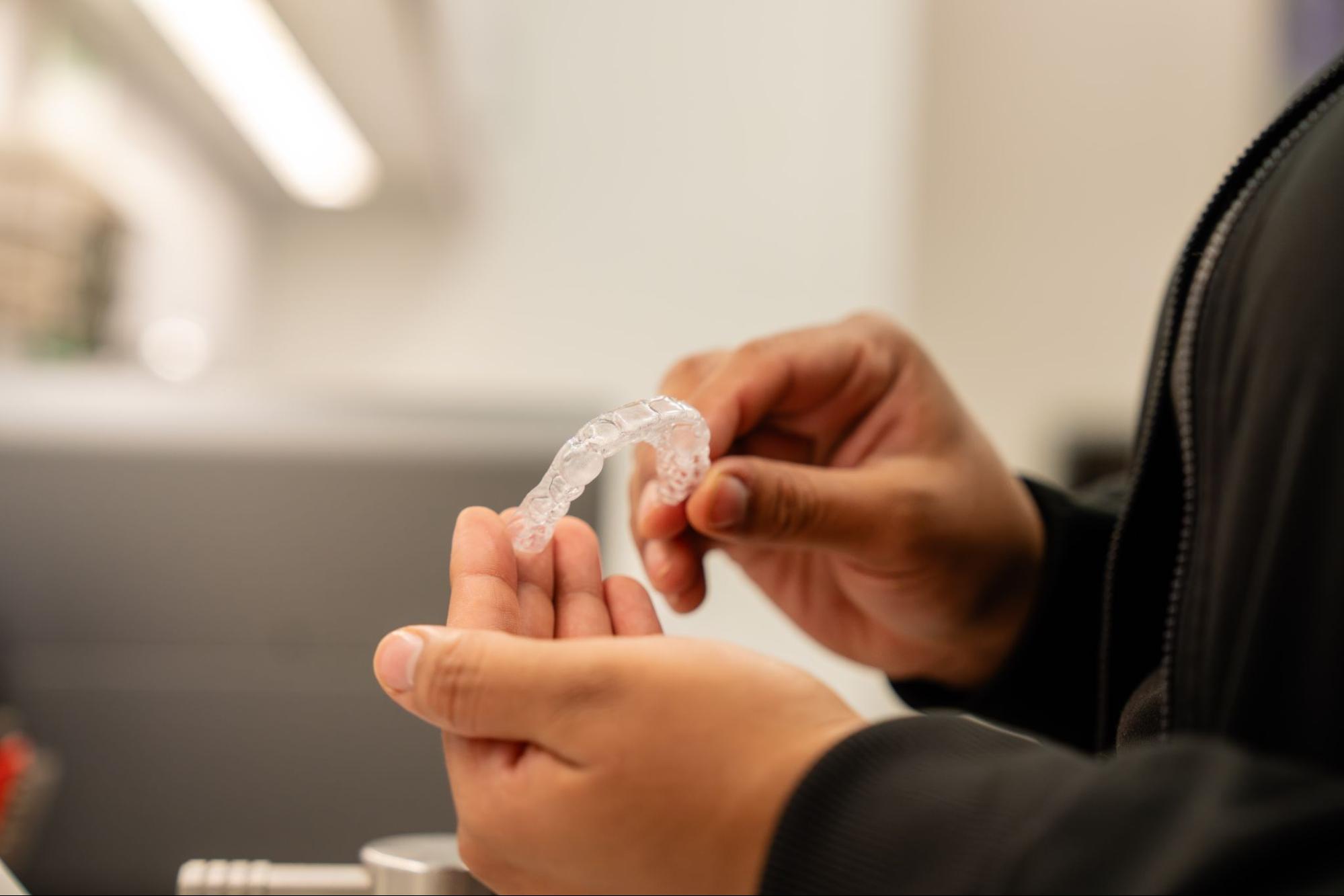
Why Sammamish patients are choosing Invisalign comes down to one thing: they want straighter teeth without the look and feel of metal braces. Clear aligners let you straighten your smile discreetly, eat what you love, and brush your teeth normally. At Dudley Smiles, Dr. Silas Dudley, DDS helps patients of all ages figure out whether clear aligners are right for their smile goals.
What Is Invisalign?
Invisalign is a clear aligner system that straightens teeth using custom, removable plastic trays. Each set of aligners shifts your teeth gradually, and you switch to a new set every one to two weeks as your smile progresses toward its final position.
The aligners are made from medical-grade SmartTrack thermoplastic. This material fits snugly against your teeth and feels smooth against your cheeks and gums. No brackets. No wires. Just clear plastic that’s nearly invisible when you smile. SmartTrack also applies gentle, consistent force, which can mean more predictable tooth movement compared to older aligner materials.
Invisalign has been FDA-approved since 1998 and has helped countless patients worldwide straighten their smiles. It was designed as a discreet alternative to metal braces, and it’s become a go-to option for teens and adults who want to straighten their teeth without drawing attention to their treatment. Clear aligners can address a wide range of bite issues, from mild crowding to more involved spacing and alignment concerns.
How Does Invisalign Treatment Work?
Invisalign treatment works in five clear steps: a free consult with digital scans, custom aligner fabrication, daily wear of 20-22 hours, periodic check-ins to monitor progress, and retainers to lock in your smile transformations. Most patients finish in 6 to 18 months. Here’s a closer look at each stage of the process.
Step 1: Free consult and digital scan
Your friendly orthodontist examines your teeth and uses a digital scanner to create a 3D map of your bite. No goopy, gaggy impressions here. This scan helps build your custom smile journey, and you can often see a preview of your projected results before you start.
Step 2: Custom aligners are made
Based on your 3D scan, a series of aligners is fabricated specifically for your teeth. Each tray is designed to make precise movements at each stage.
Step 3: Wear your aligners 20-22 hours daily
You’ll switch to a new set of trays every one to two weeks. The aligners should only come out for eating, drinking anything other than water, and brushing your teeth.
Step 4: Check-ins monitor your progress
You’ll have periodic visits to make sure everything is tracking as planned. Many practices offer virtual check-ins, so you spend less time in the chair.
Step 5: Retainers keep your results
Once active treatment ends, you’ll wear retainers to maintain your new smile. Treatment typically lasts 6 to 18 months, depending on your case.
Top Benefits Driving Patients to Choose Invisalign
What makes clear aligners so appealing? Here are the reasons patients in Sammamish and beyond keep choosing Invisalign:
Are clear aligners really nearly invisible?
Yes. The clear trays blend in with your teeth, so most people won’t notice you’re in treatment. This matters for work presentations, school photos, and social events.
Can I take them out to eat?
Absolutely. Pop your aligners out for meals and snacks. No food restrictions. No picking popcorn kernels out of brackets.
How comfortable are they?
Smooth plastic means no metal poking your cheeks or wires irritating your gums. Most patients adjust to wearing aligners within a day or two.
Will I need fewer visits?
Often, yes. With virtual monitoring options, you may not need to come in as often as you would with metal braces. Your time stays your own.
How predictable are the smile transformations?
3D treatment planning shows you what your smile could look like before you even start. You’ll know what to expect from day one.
Is it easier to keep my teeth clean?
Since you remove the aligners to brush and floss, keeping your teeth clean is simple. This helps reduce the risk of cavities and gum issues during treatment.
Invisalign vs. Traditional Braces: Key Differences
Trying to decide between clear aligners and braces? Here’s how they compare:
| Feature | Invisalign | Traditional Braces |
|---|---|---|
| Appearance | Clear, nearly invisible trays | Visible metal or ceramic brackets and wires |
| Comfort | Smooth plastic with no sharp edges | Brackets and wires can irritate cheeks and gums |
| Removability | Take out for meals, brushing, and special occasions | Fixed to teeth 24/7 until treatment ends |
| Oral hygiene | Brush and floss normally | Requires special tools and techniques to clean around brackets |
| Best for | Mild to moderate alignment issues | Complex cases and severe bite problems |
| Visit frequency | Fewer in-person checkups, virtual options available | Regular adjustments needed every few weeks |
Both options work well for many patients. The right choice depends on your specific needs, lifestyle, and what your friendly orthodontist recommends after examining your teeth.
What Affects the Cost of Invisalign?
Invisalign cost depends on case complexity, treatment length, and insurance coverage, and is typically comparable to metal braces. Several factors influence what Sammamish patients pay for clear aligner treatment:
- Case complexity. More alignment issues typically mean more aligner trays and a longer smile journey, which affects the overall cost.
- Treatment length. A straightforward case that takes six months will generally cost less than one requiring 18 months of treatment.
- Insurance coverage. Many dental and orthodontic insurance plans cover Invisalign the same way they cover metal braces. Check with your provider to understand your benefits.
- Flexible payment options. FSA and HSA accounts can help cover costs. Many orthodontic offices, including Dudley Smiles, offer easy financing and affordable payment plans to fit your family’s budget.
- Free consults. Most practices provide a complimentary initial visit where you’ll receive a personalized quote based on your specific treatment needs.
Good news: Invisalign and metal braces are often priced comparably. The best way to know what your treatment will cost is to schedule a free consult and get an estimate tailored to your smile.
Am I a Good Candidate for Invisalign in Sammamish?
Invisalign treats a wide range of orthodontic issues effectively:
- Crowded teeth
- Gaps and spacing
- Overbite and underbite
- Crossbite
- Open bite
Who can wear Invisalign?
Teens and adults are excellent candidates. Invisalign First is also available for younger children with developing smiles who need early treatment.
What does it require?
Success with clear aligners depends on wearing them 20 to 22 hours every day. If you can commit to that, you’re likely a good fit.
Are there limitations?
Severe skeletal issues or very complex cases may need metal braces or a combination approach. Dr. Dudley, an orthodontic specialist with extensive training, can evaluate your bite and recommend the best path forward.
What about oral health?
Good oral health is essential before starting any orthodontic treatment. Cavities or gum disease should be addressed first.
The only way to know for sure if Invisalign will work for you is to have your friendly orthodontist take a look. A free consult gives you answers without any obligation.
Frequently Asked Questions About Invisalign
How long does Invisalign treatment take?
Most patients finish treatment in 6 to 18 months. Mild cases with minor crowding or spacing may finish faster. More complex alignment issues take longer. Your friendly orthodontist will give you a timeline estimate during your consultation.
Does Invisalign hurt?
Not really. You might feel a little snug pressure for a day or two after switching to a new set of trays, kind of like your teeth are stretching into a new position. That’s a good sign, it means things are moving. Most patients say it’s way more comfortable than the tightening visits that come with metal braces.
Can I eat with Invisalign in?
No. Remove your aligners for all meals and snacks. You should also take them out for any drinks besides water, especially coffee, tea, or anything with color that could stain the trays. Pop them back in after you brush your teeth.
How often do I need visits?
Plan on visits every 6 to 10 weeks to check your progress. Many orthodontists now offer virtual monitoring, which means you can send photos from home and reduce your in-person visits.
Will I need a retainer afterward?
Yes. Retainers are essential for keeping your smile transformations long-term. Without them, teeth can shift back toward their original positions. Your friendly orthodontist will explain your retainer options when you finish active treatment.
Is Invisalign covered by insurance for Sammamish patients?
Often, yes. Many orthodontic insurance plans cover Invisalign at the same level as metal braces. Contact your insurance provider or ask during your free consult to find out what your plan includes.
Ready to find out if clear aligners are right for you? At Dudley Smiles, serving Sammamish families from our Issaquah office, Dr. Silas Dudley and the team use digital scans and 3D treatment planning to map out your smile transformations. Schedule your free consult today and let’s discover the smile of your dreams.